

DaCapo Brainscience announced the appointment of Leslie Williams as President and Chief Executive Officer, the appointment of Mridul Mehta, PhD, as Chief Technology Officer, and the promotion of Warren Hirst, PhD, to Chief Scientific Officer. The biotechnology veteran Williams will lead the company through its transition from early discovery to becoming a clinical-stage drug developer. This leadership restructuring advances the company's goal to identify and develop small-molecule therapies capable of slowing or halting the progression of neurodegenerative diseases, beginning with Parkinson's disease.
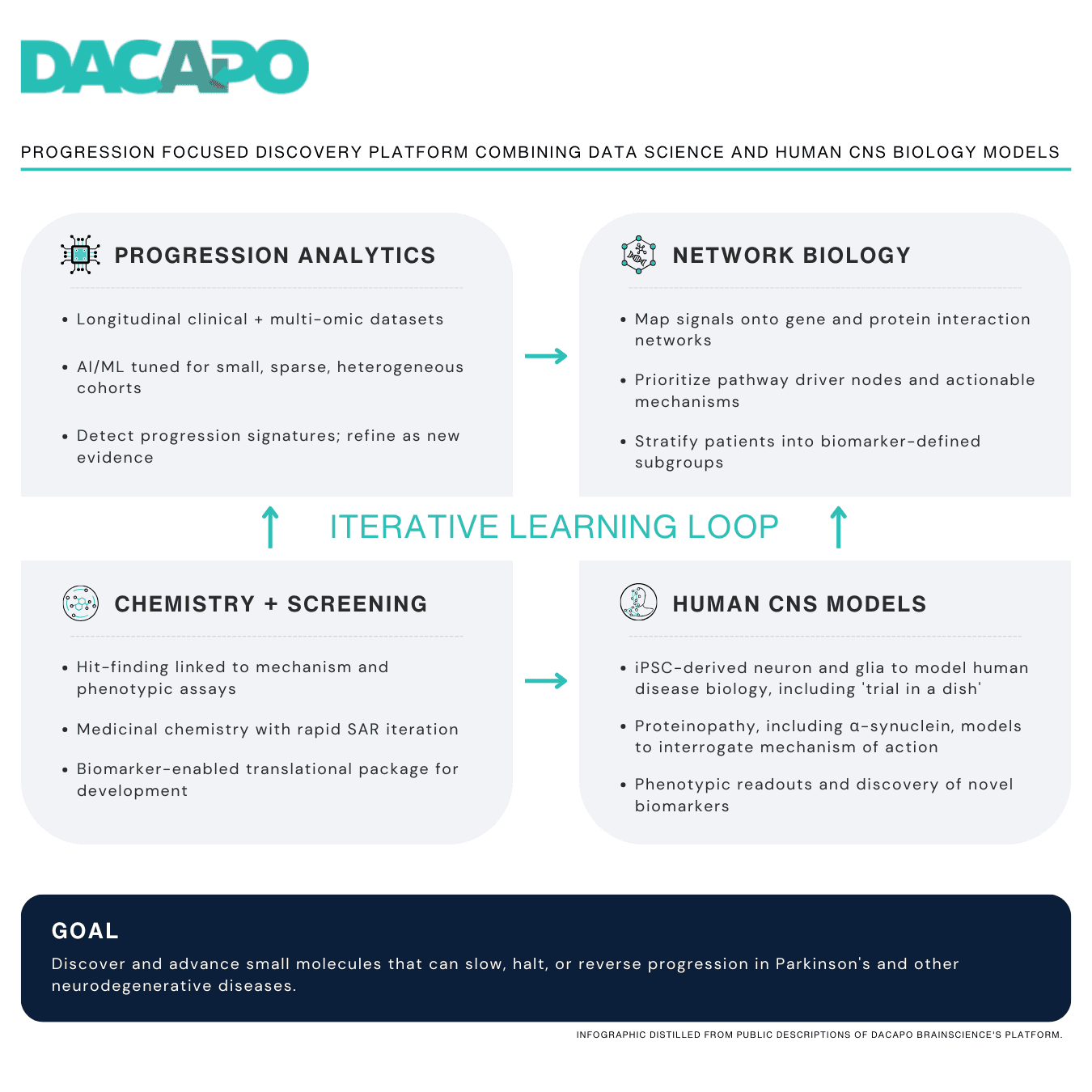
The company focuses on applying its proprietary discovery platform—an in vitro model of neurodegenerative disease that recapitulates human biology—to identify and develop these therapies. By combining advanced data analysis with human-based laboratory models, DaCapo Brainscience aims to identify new disease pathways and design targeted treatments. The strengthened leadership team is positioned to drive this research forward, with Mehta bringing technological expertise as CTO and Hirst advancing scientific strategy as CSO.
This announcement matters because neurodegenerative diseases like Parkinson's represent a significant unmet medical need, affecting millions worldwide with limited treatment options that address disease progression rather than just symptoms. DaCapo Brainscience's approach of using human-based models could lead to more effective therapies by better mimicking human biology compared to traditional animal models. The appointment of experienced leadership indicates the company is preparing for critical next steps, including potential clinical trials, which could accelerate the development of much-needed treatments.
The implications of this leadership change extend beyond the company itself to the broader neurodegenerative disease research field. As DaCapo Brainscience moves toward clinical development, its progress could validate the use of human-based in vitro models for drug discovery, potentially influencing how other companies approach similar research. Success in developing therapies that slow or stop disease progression would represent a paradigm shift in treating conditions like Parkinson's, offering hope for improved patient outcomes and reduced healthcare burdens. The company's focus on small-molecule therapies also suggests potential for oral medications that could be more accessible than current invasive treatments.